
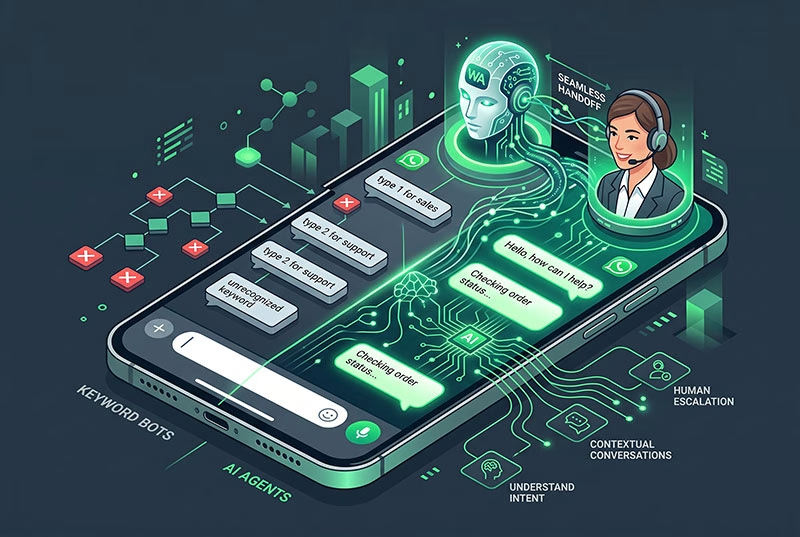
A few years ago, “WhatsApp chatbot” meant one thing: type 1 for sales, 2 for support, 3 to talk to a human. Customers hated it. One wrong keyword and the whole conversation broke down.
That version of automation is fading fast. In 2026, businesses across Malaysia are moving from rigid, rule-based bots to AI agents — assistants that understand natural language, hold context across a conversation, and know exactly when to hand things over to a real person.
If you’re running a business on WhatsApp, or thinking about adopting the WhatsApp Business API, understanding this shift matters. It’s the difference between a chatbot that frustrates customers and an AI agent that actually grows your business.
Why Keyword Bots Stopped Working
Traditional WhatsApp bots followed fixed decision trees. They worked fine for simple, predictable questions — but broke down the moment a customer phrased something differently, asked two questions at once, or went off-script.
For Malaysian businesses juggling English, Bahasa Malaysia, and Mandarin conversations, this rigidity became a real bottleneck. Customers don’t type in neat, bot-friendly sentences. They ask “got stock or not,” “how much delivery,” or send a voice note. A keyword bot simply can’t keep up — and a frustrated customer is one tap away from switching to a competitor’s WhatsApp number.
What AI Agents Do Differently
AI agents on WhatsApp don’t rely on exact keyword matches. Instead, they:
- Understand intent, not just words — recognising that “boleh COD tak” and “can I pay on delivery” mean the same thing
- Hold context across a conversation — remembering what a customer asked three messages ago, instead of resetting every time
- Handle the repetitive 80% — answering FAQs, checking order status, sharing pricing or catalogues, and qualifying leads automatically
- Know their limits — recognising when a conversation needs a human (a complaint, a custom quote, a sensitive issue) and handing it off smoothly, with full context intact
This isn’t about replacing your sales or support team. It’s about letting AI absorb the repeatable, high-volume questions so your team can focus on the conversations that actually need a human touch — closing deals, resolving complex issues, and building relationships.
Where This Matters Most for Malaysian Businesses
Lead capture from ads. Click-to-WhatsApp ads now send customers straight into a chat instead of a form. An AI agent can greet them instantly, ask qualifying questions, and route hot leads to your sales team — even outside office hours.
Retail and F&B. Customers asking about stock, delivery areas, or opening hours get instant, accurate answers 24/7, without tying up a staff member’s phone.
Appointment-based businesses (clinics, salons, services). AI agents can handle booking requests, confirmations, and reminders, cutting down no-shows without extra admin work.
Customer retention. Instead of one-off broadcast blasts, AI agents can hold ongoing, personalised conversations — following up on abandoned enquiries or re-engaging customers who’ve gone quiet.
What to Look for Before You Automate
Not every “AI chatbot” solution is built the same. Before adding AI agents to your WhatsApp Business API setup, businesses should check for:
- Human handoff that actually works — the AI should escalate smoothly, with conversation history intact, not drop the customer into a black hole
- Message quality safeguards — Meta actively monitors block rates and spam reports; a poorly built AI flow can put your account’s quality rating at risk
- Multilingual support — genuinely useful for Malaysia’s multi-language customer base, not just English
- Clear escalation rules — sensitive topics like complaints, refunds, or anything reputational should always route to a human
The Bottom Line
WhatsApp isn’t just a messaging channel anymore — it’s often the first place a customer interacts with your business, from ad click to purchase to after-sales support. Rigid, keyword-based bots can’t keep pace with that responsibility. AI agents can.
For Malaysian SMEs and enterprises alike, the businesses that get ahead in 2026 won’t be the ones automating the most — they’ll be the ones automating the right conversations, while keeping a human firmly in the loop where it counts.
Want to see how AI-powered WhatsApp automation could work for your business? Talk to Seampify about setting up the WhatsApp Business API the right way.


